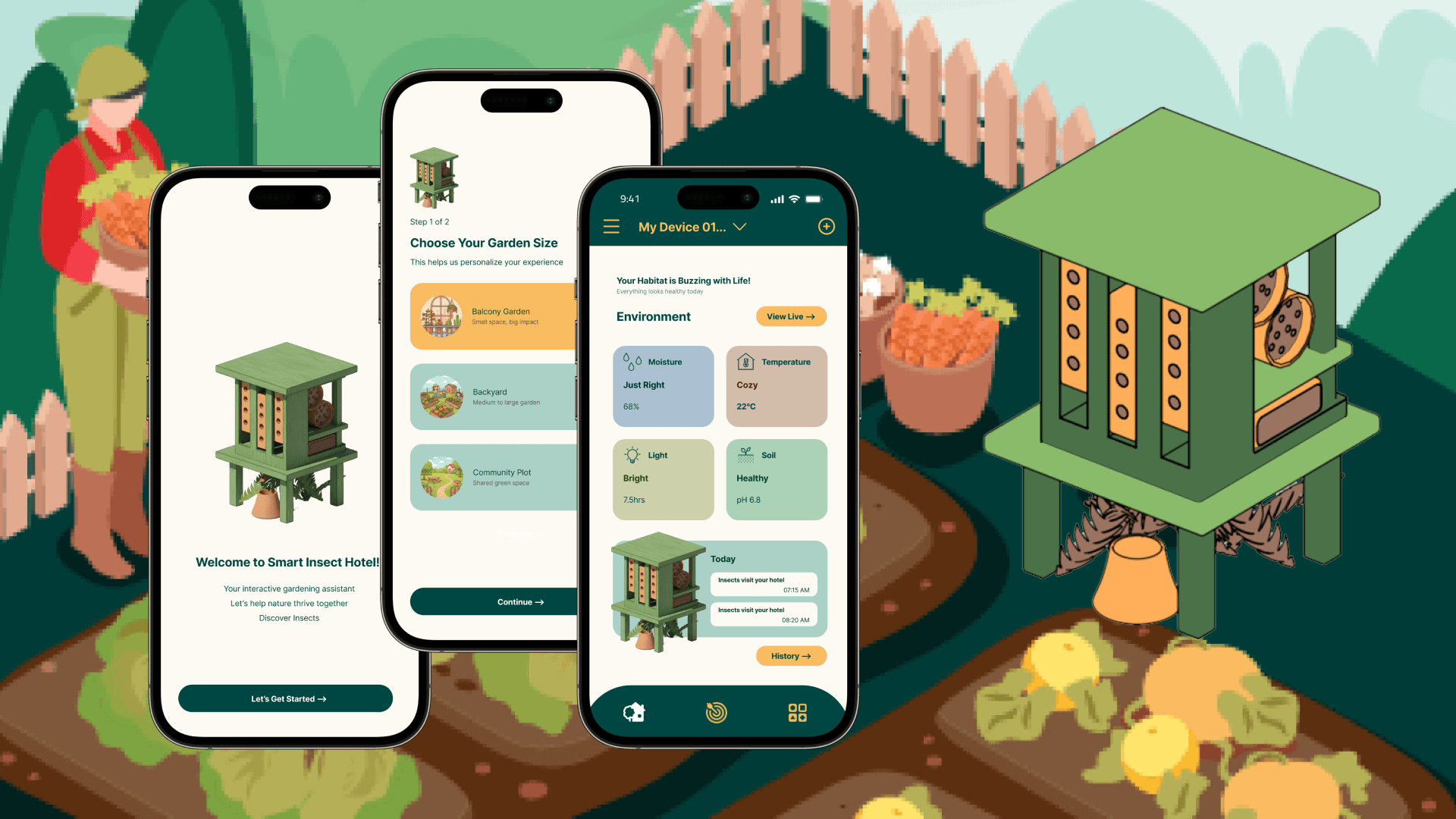
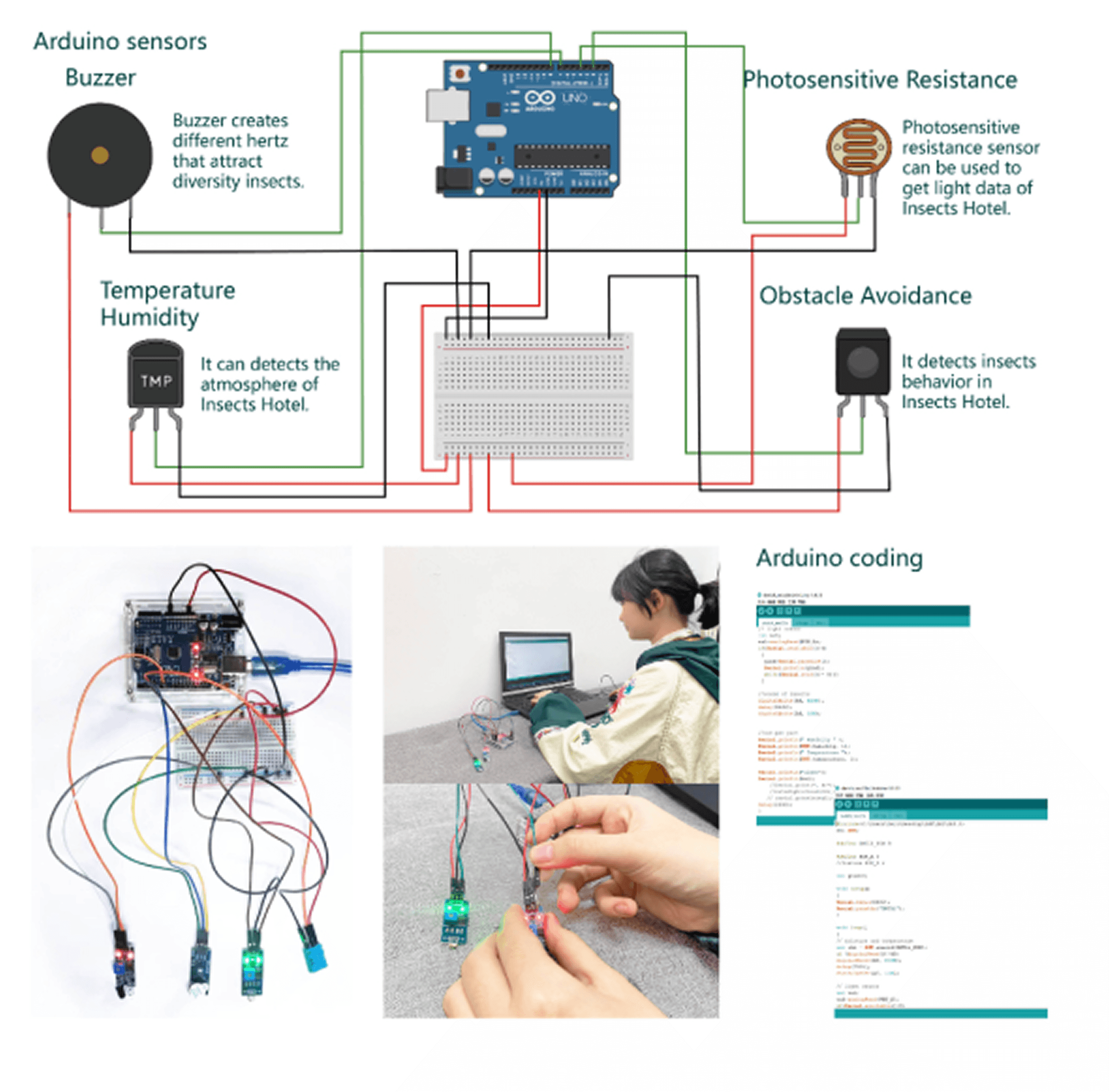
Insects Hotel is an Arduino-powered micro-habitat designed to support pollinators in home gardens. By sensing moisture, temperature, and light, it maintains suitable living conditions for insects and encourages people to care for their local ecology.

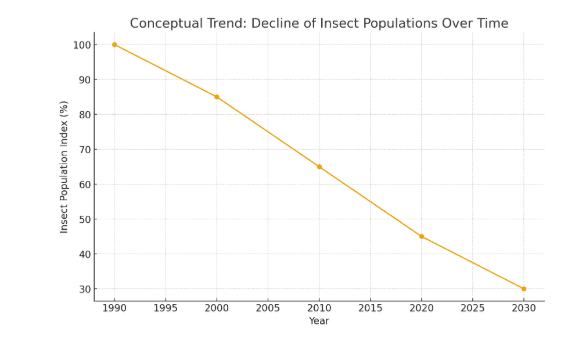
Despite the growing number of urban and home gardens, urban biodiversity continues to decline. Many city gardens appear green and well-maintained, yet they often lack ecological diversity and functional habitats. Without insects(especially pollinators and decomposers) plant growth becomes unstable, food webs break down, and ecosystems lose resilience. High rates of family gardening do not necessarily translate into healthier environments, as ornamental planting, pesticide use, and “clean” landscaping frequently eliminate the conditions insects need to survive. This disconnect reveals that urban biodiversity loss is not caused by the absence of green space, but by a lack of insect-aware garden design and ecological understanding.
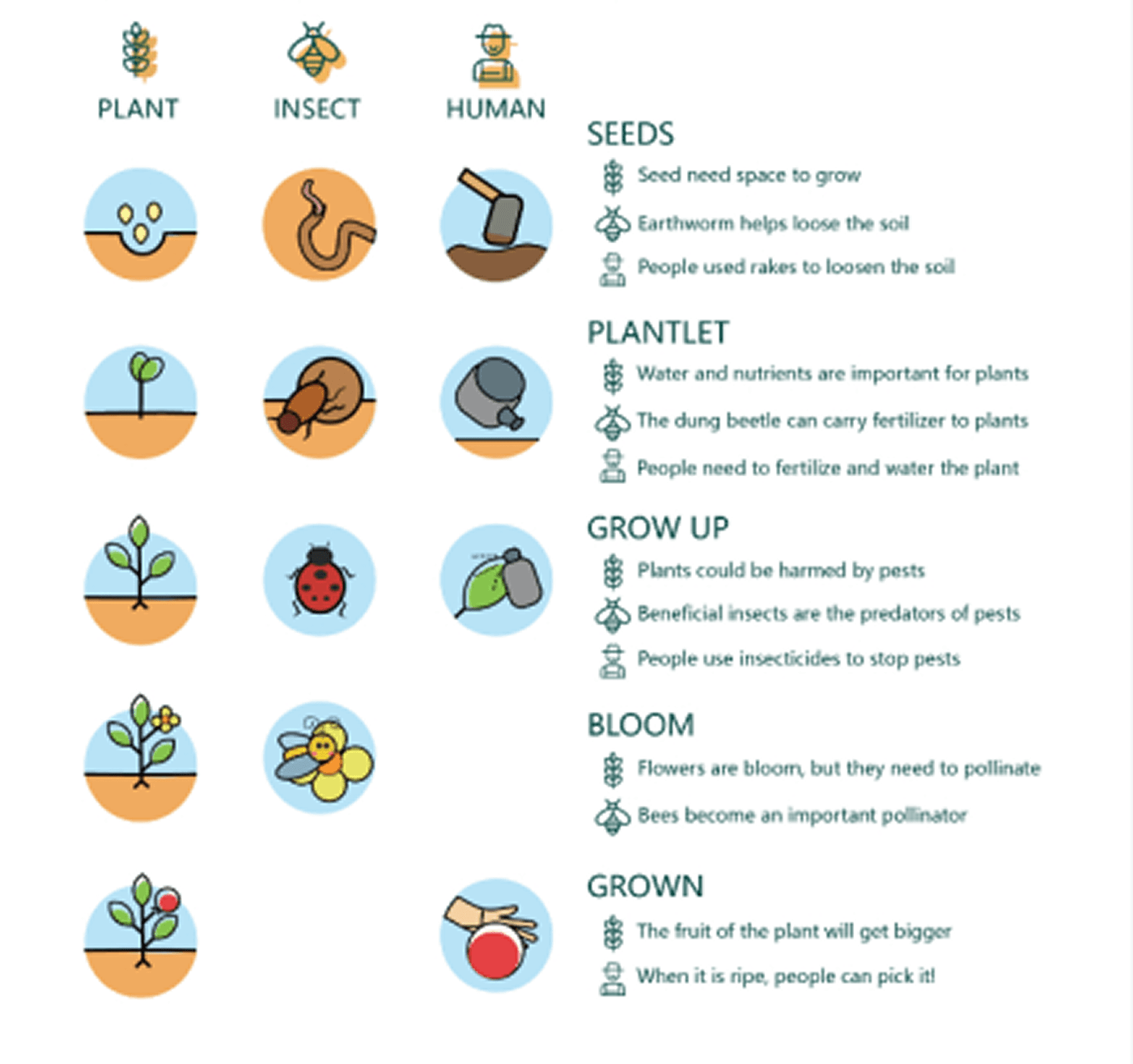
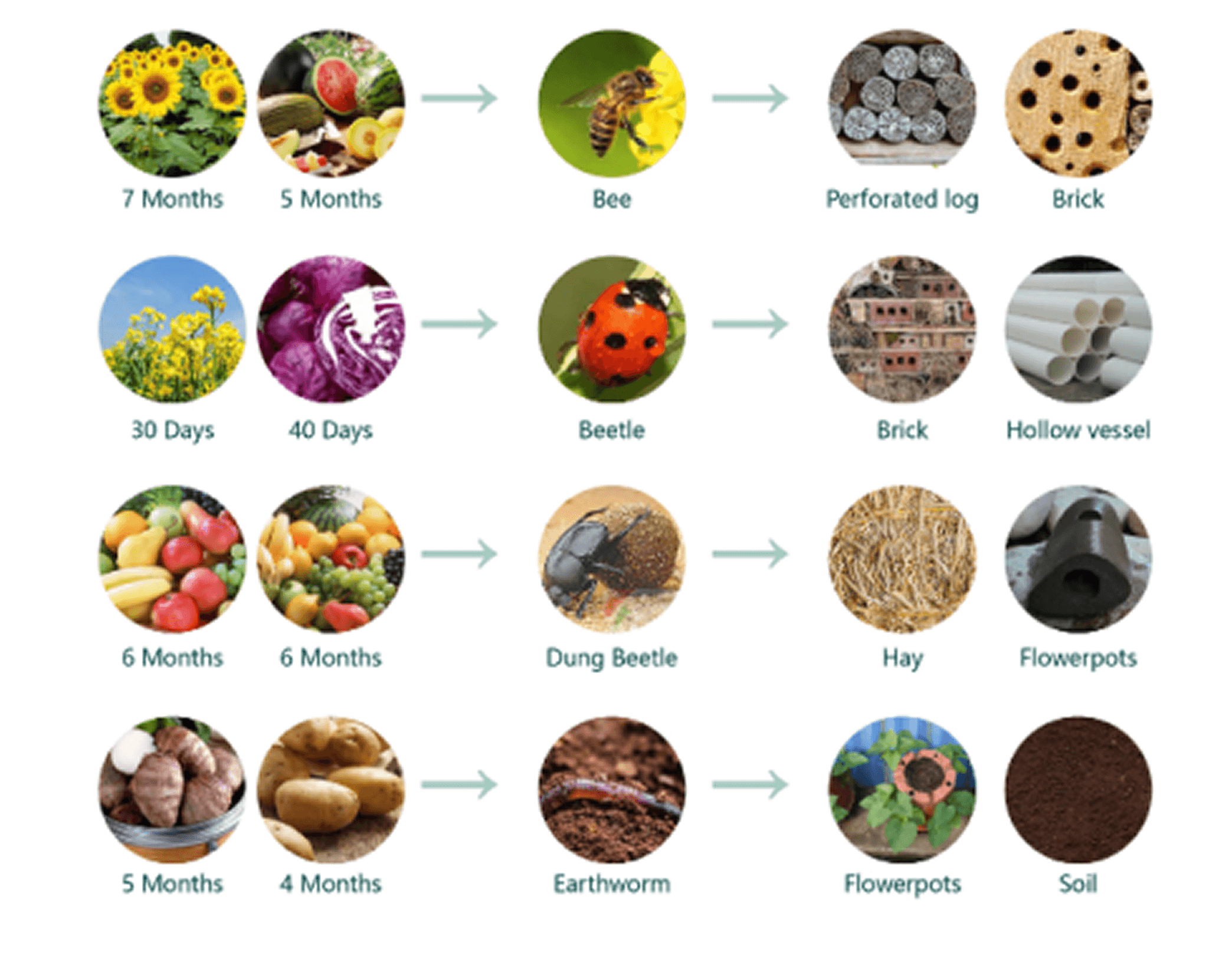
Environmental Feature That Support Insect Life
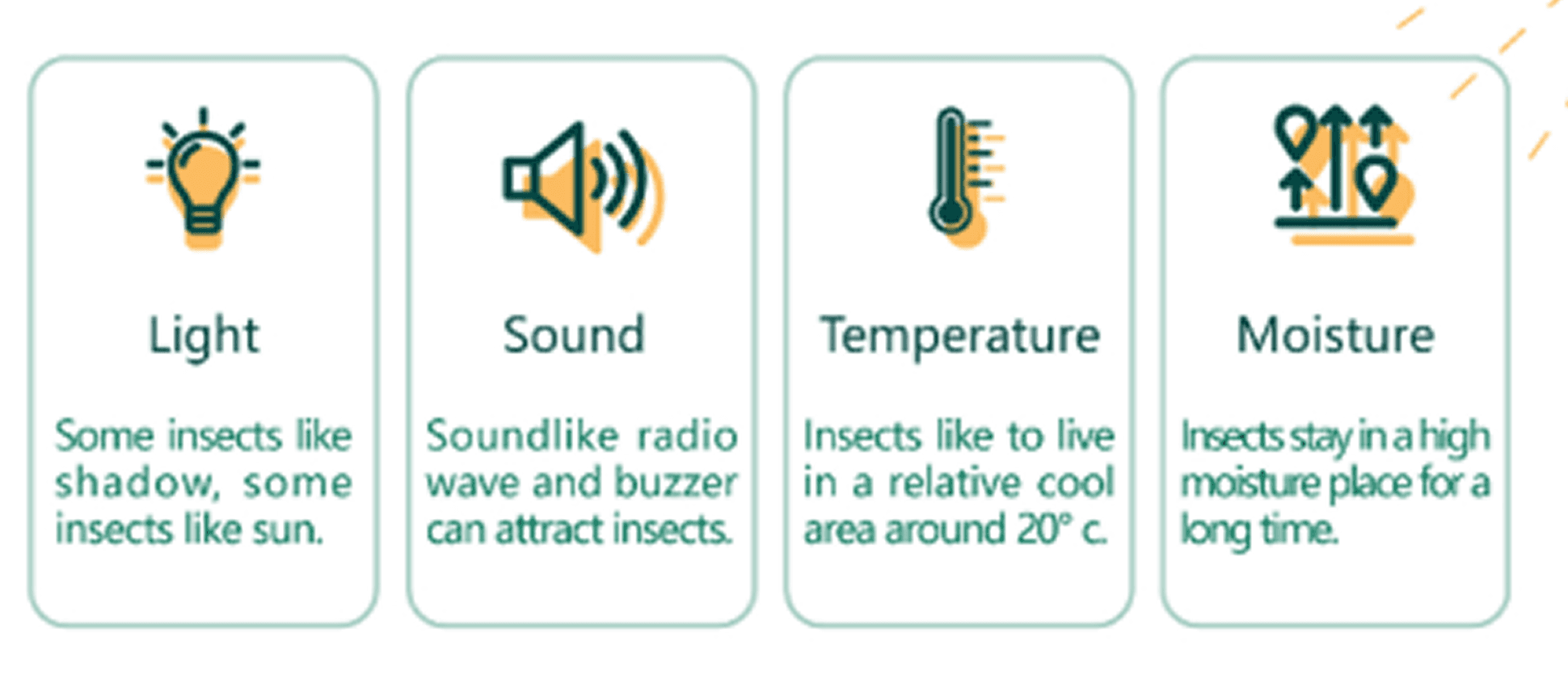

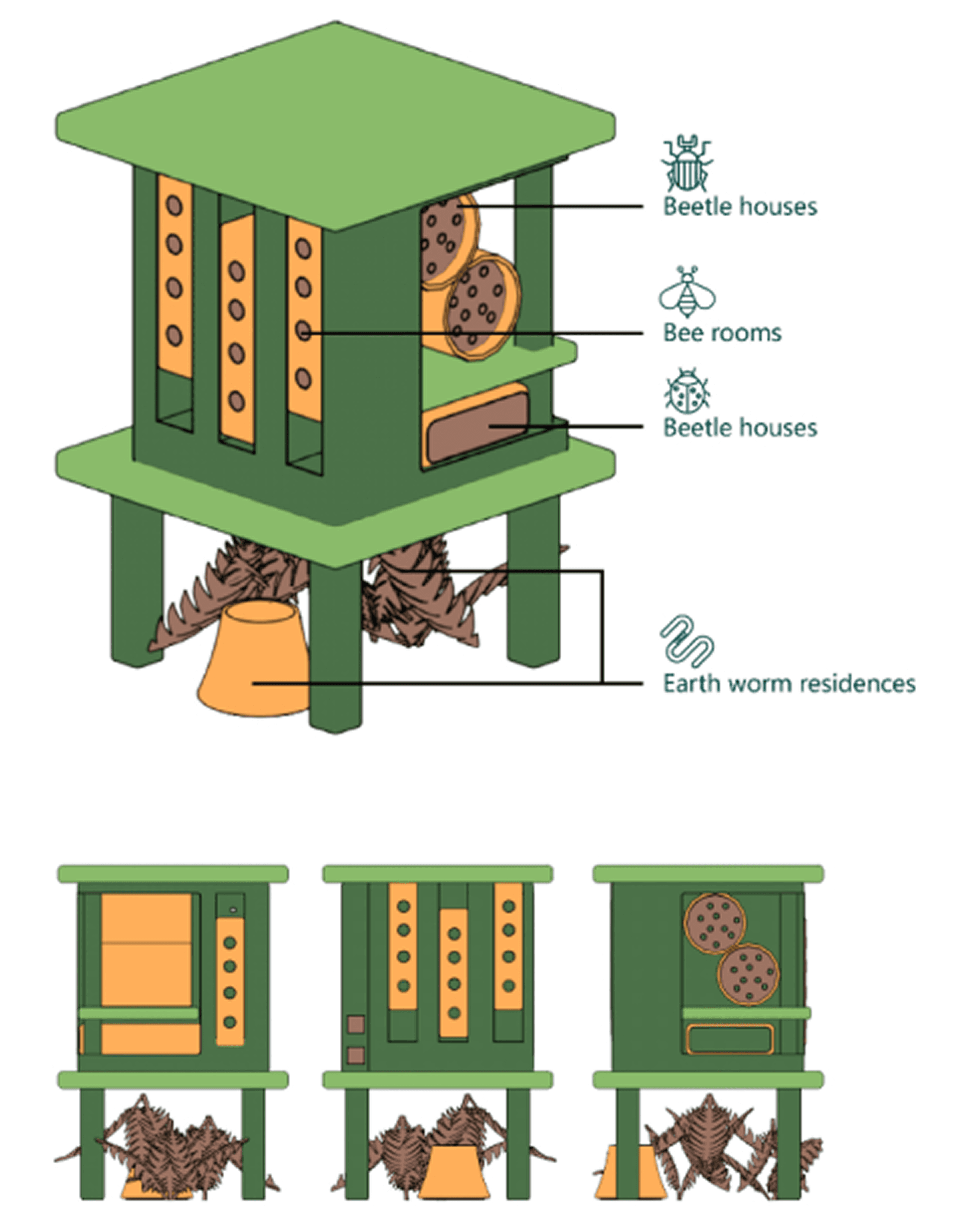
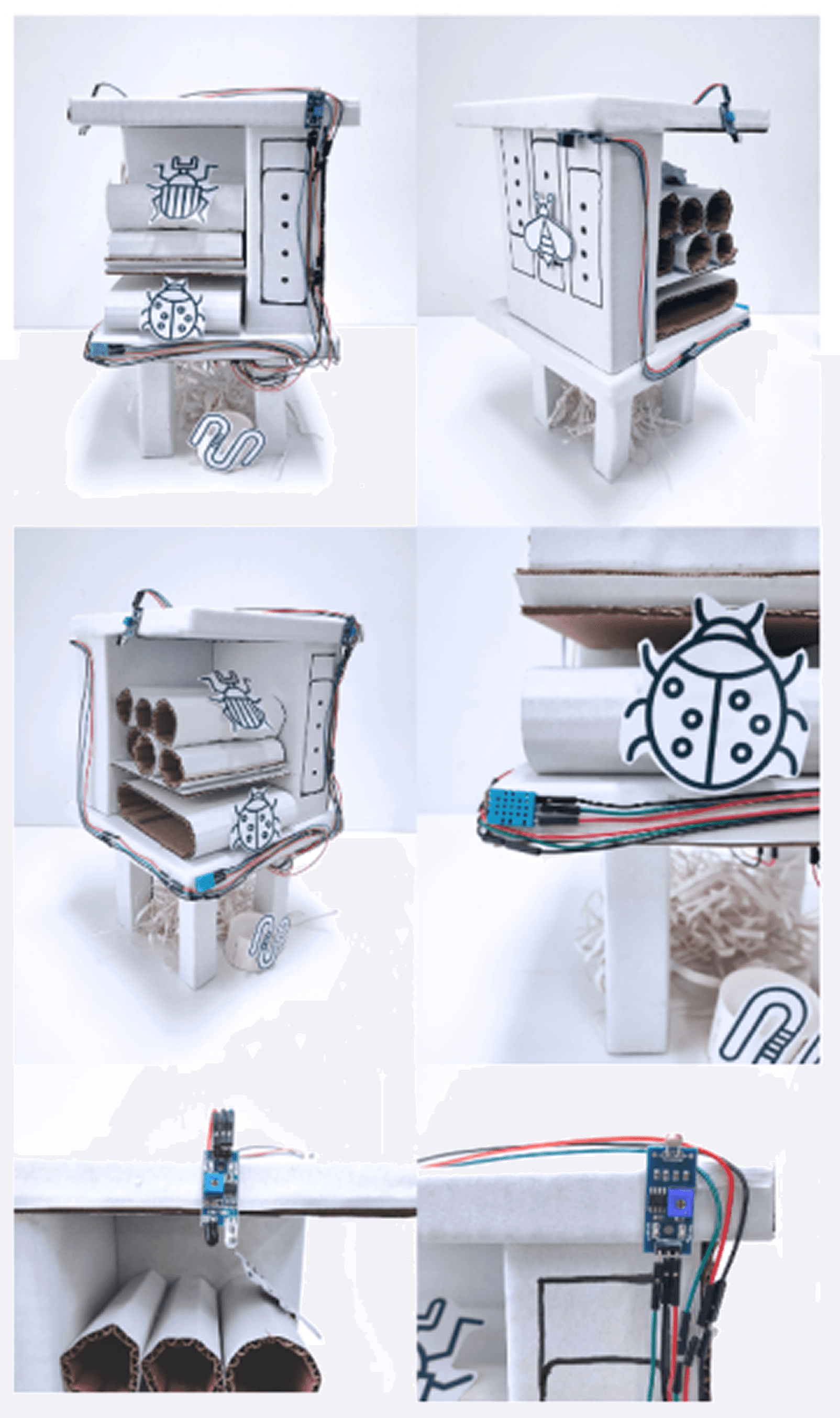

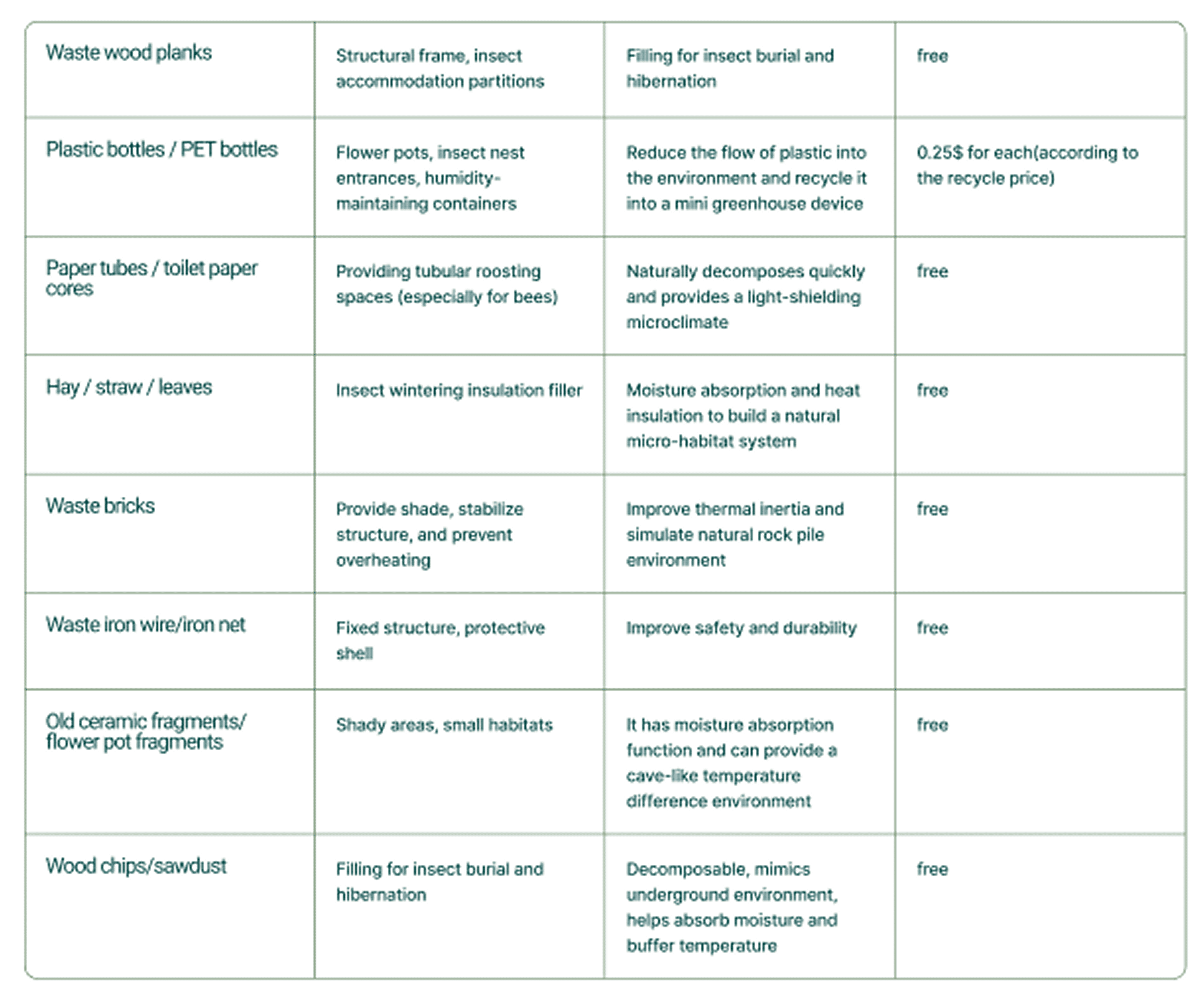
Understanding your garden to attract the right insects
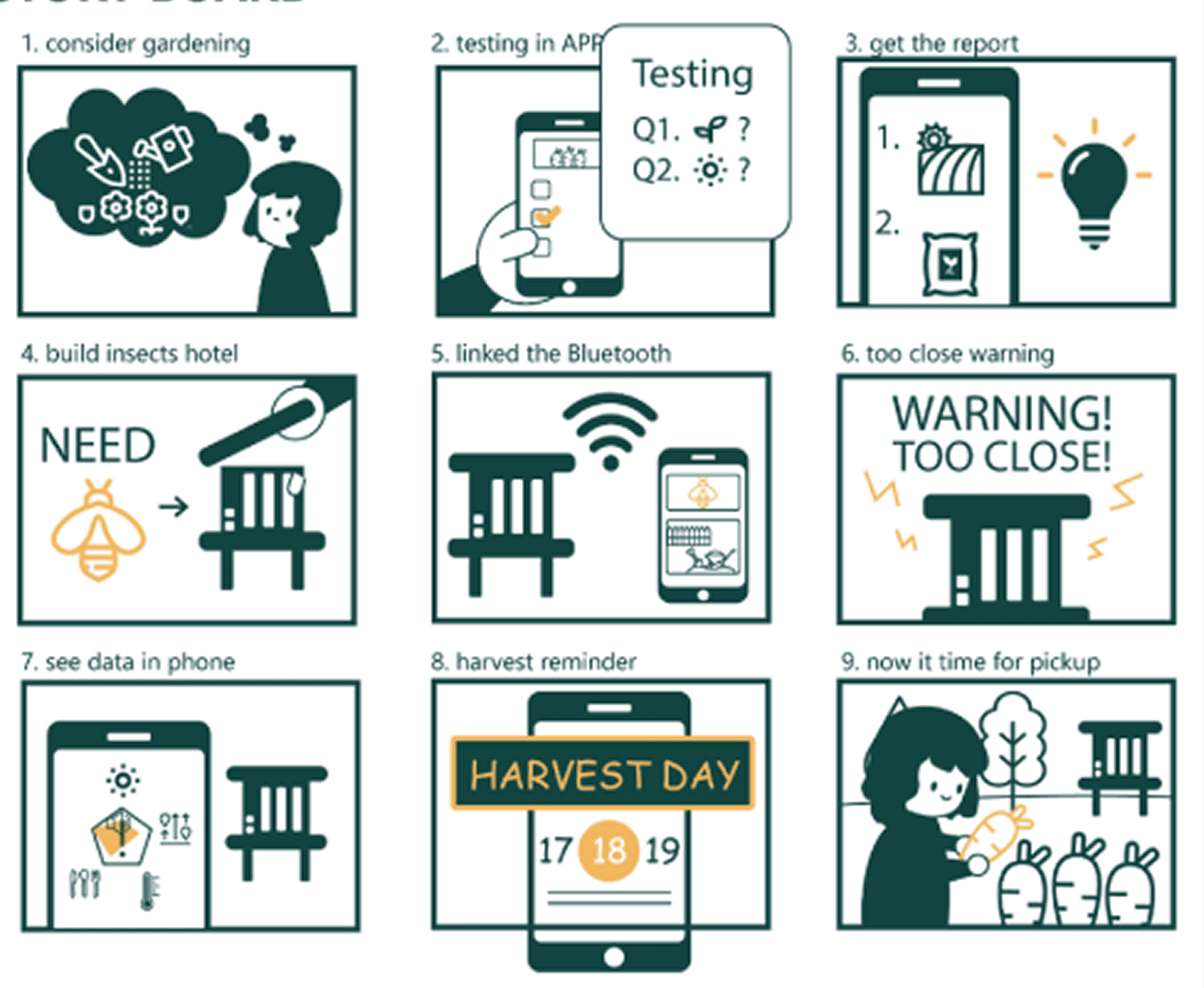
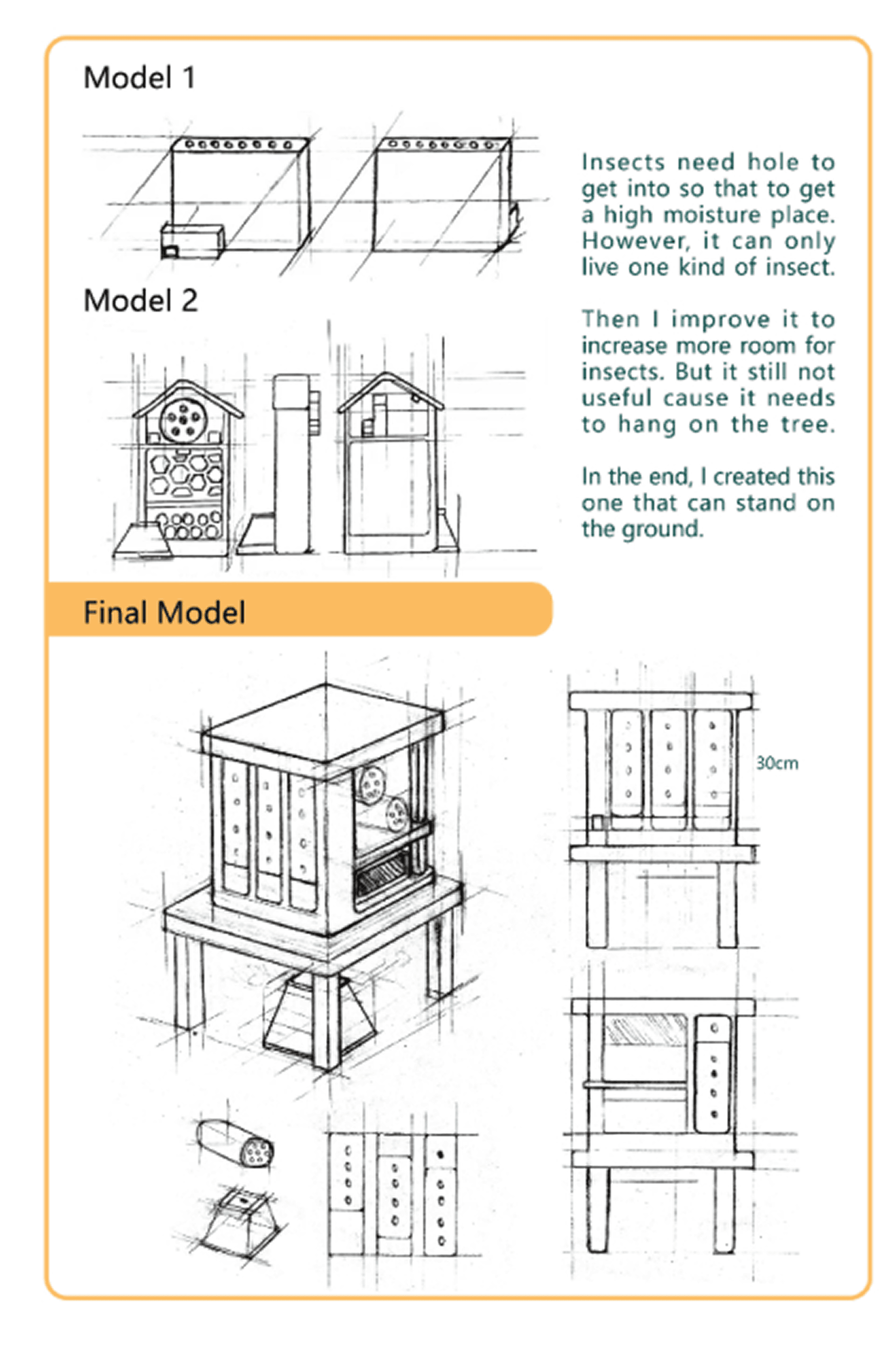
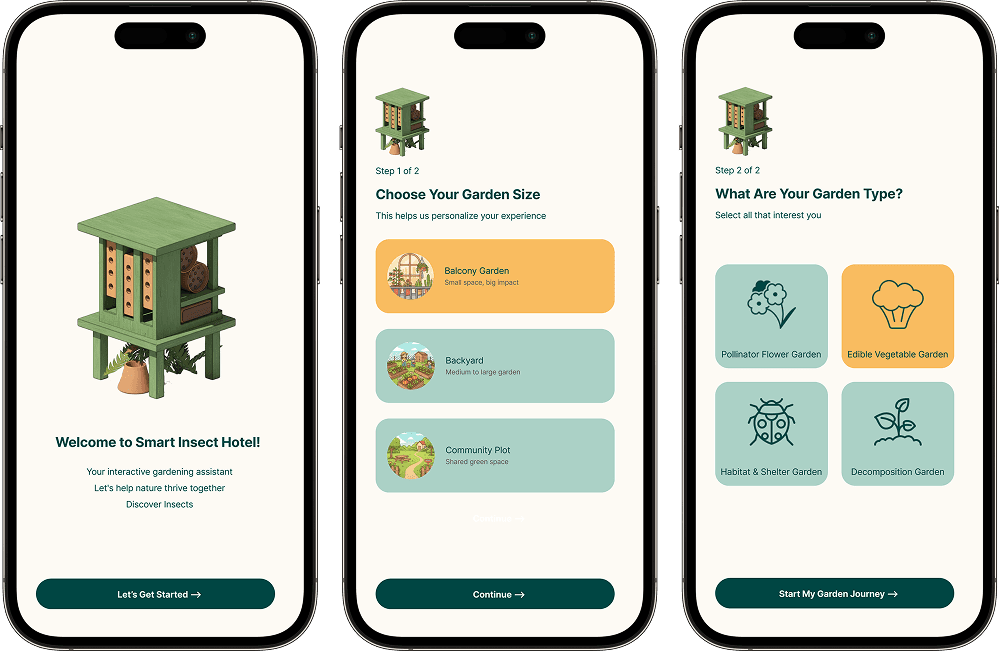
Through a short onboarding assessment, the system learns about the user’s garden size, type, and goals. Based on the results, Smart Insect Hotel recommends what kind of insect hotel structure and habitat setup is most suitable for attracting specific insect species. This helps users make informed ecological decisions from the beginning, rather than relying on guesswork or trial and error.
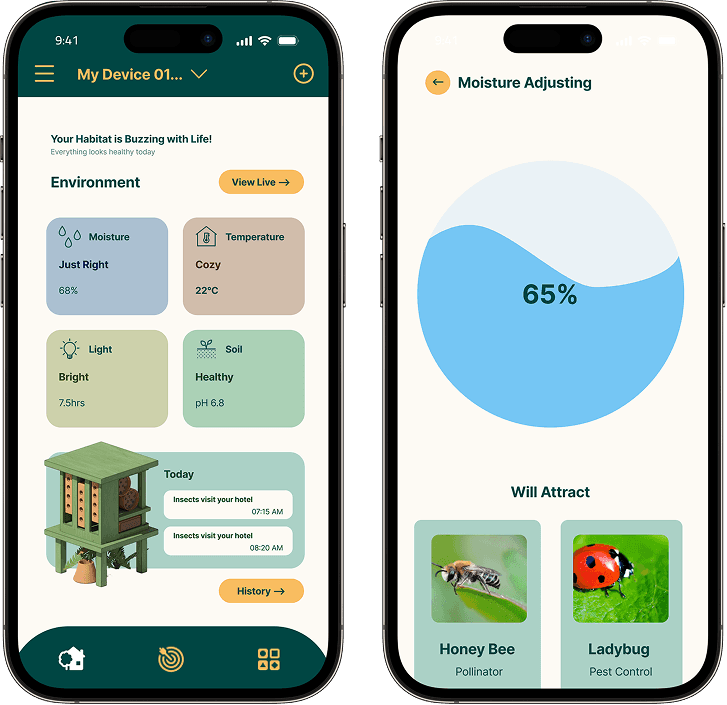
The homepage displays all adjustable environmental factors, including moisture, light, temperature, and habitat conditions. Users can tap into each parameter to make adjustments, and the interface immediately shows which insects are likely to be attracted under the current conditions. This allows users to clearly understand the cause-and-effect relationship between environmental changes and insect activity.
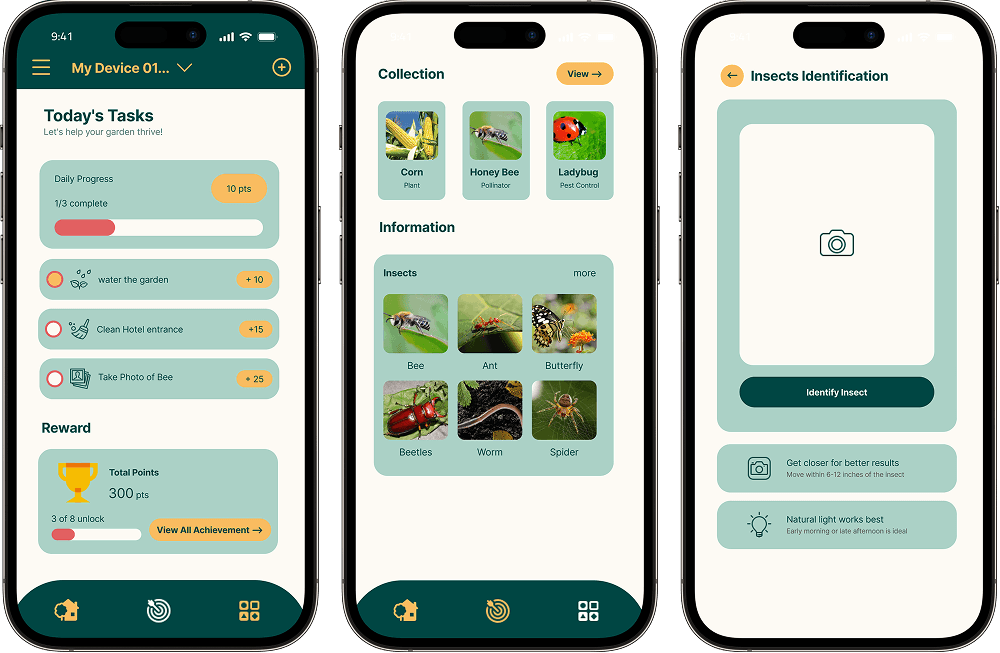
Daily tasks and a built-in insect knowledge base encourage users to gradually learn about insects through hands-on actions. The photo-based insect identification feature allows users to quickly identify insects they encounter in their garden, reducing uncertainty and fear. Users do not need prior biological knowledge to confidently recognize insects and understand their ecological roles.